For every Enzo Ferrari there are many Preston Tuckers. You have only to look at John DeLorean or Henrik Fisker, both vastly experienced industry veterans with high-profile reputations and access to avenues of finance, to see what the challenges of achieving success might be.
This feature was first published in Octane issue 211.
It is not surprising then that most, if not all, readers of this story will never have heard of Cliff Hall and the Corwin Getaway. The Getaway was a daring and visionary car, designed not only to fill an automotive niche in an innovative way but also to bring a measure of prosperity and self-improvement to one of the world’s most economically deprived inner cities, the Watts district of Los Angeles, California.
That a simple, lightweight two-seater could do all these things would not be considered a stretch, given its parent. Cliff Hall was a man whose quick and creative mind was packed with ideas. He was constantly driven to create new things, compelled to follow his dreams. He had an enthusiasm to be, in his own words, ‘a builder, a creator – it came naturally to me’.
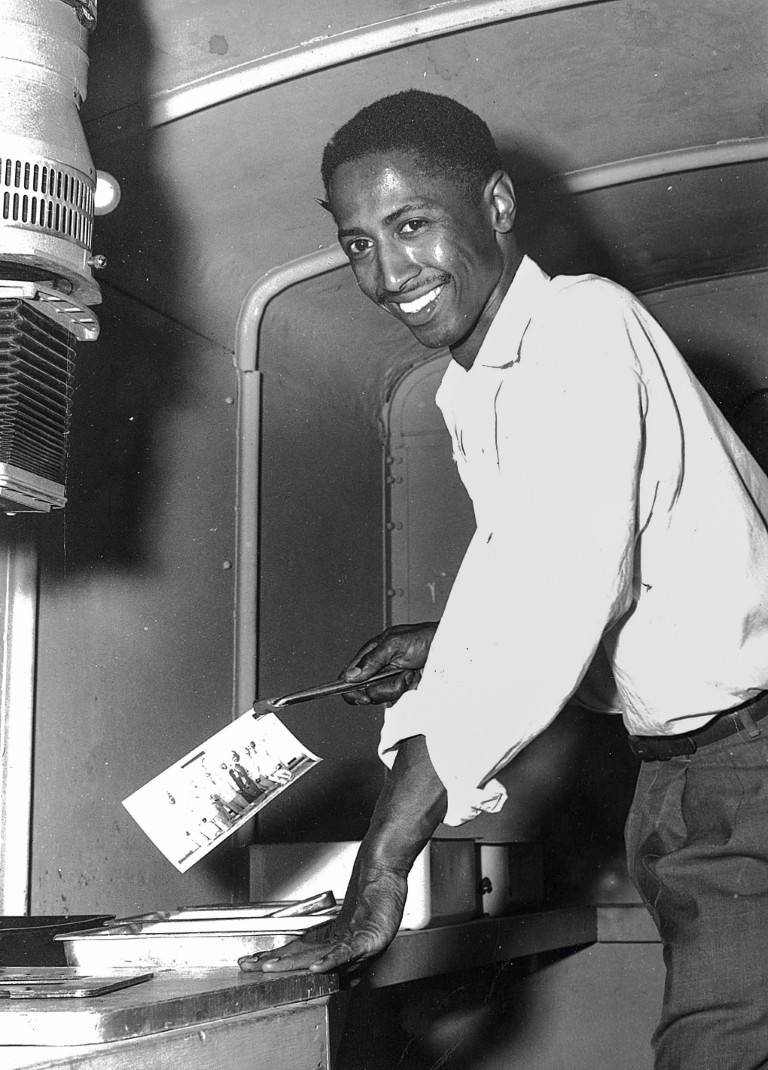
Born in Los Angeles in August 1925, Hall conquered many of the obstacles that faced a black man born nearly 30 years before the civil rights movement in the United States had begun in earnest. Not only was he arguably the leading black society photographer of his time, he was considered one of Hollywood’s most notable society photographers, by any measure. Typical of how Hall used his imagination, talent and drive was the way in which he leapfrogged his competition by offering fully developed prints of guests arriving at a social event as they left.
How? He designed and built a mobile photo-developing lab in a converted van. Parked near the venue, he was able to process his film while the guests were enjoying their evening and, as they left, would hand out finished images to them. Of course, his print outlets also had the photos for their morning editions. This, while all his peers would have had to wait hours to distribute their work. In today’s digital social media world that may not seem like much, but it was groundbreaking at the time, and typical of the way Cliff Hall saw opportunity in challenges.
I visited with him in his apartment an hour-and-a-half from Los Angeles a few months before he passed away in January 2020. His voice was a bit weak, but his spirit and energy were strong as he proudly showed off a floor-standing wood unit, a sort of Swiss Army Knife of furnishing. It combined, as elegantly and compactly as the best nautical design, a desk, closet, table with two stools and a bed. All in a cabinet taking up a few square feet of floor space. It represented both a living capsule and a characterful piece of furniture. When he passed away at 94, it had seemed as if he could go on forever, conceiving a steady stream of new ideas and developing plans to bring his new creations to life. He had a keen eye for design and the engineering expertise to realise his visions.
It is not unreasonable to say that his automotive activities began with soapbox derby cars. This was a competition for youngsters, usually boys, who would build their own gravity racers from commonly available components. As much work as possible was to be done by the competitor. Cliff Hall came to this not as a competitor, but as an interested and enthusiastic supporter and consultant.
After watching a soapbox derby race, he quickly realised what was going on. ‘I would see beautiful cars and I knew the kids didn’t make them – the fathers would make the cars. I wanted to make a car equal to or better than the others, so I built one for a boy. But the car I built went so fast he got scared; he put on the brakes and I said “Take your foot off the brake! You’re going to win!”’
It was not to be the last. Hall built electric- and gasoline-powered cars for his children when they were young and ideas kept flowing from his head throughout his long life. Raised by his grandmother, he became interested in draughtsmanship and machining. He trained and worked as an electrical engineer in the US Navy, which he joined in 1943. After his discharge in 1946 he went to photography school – on a whim, accompanying a friend for lack of anything better to do, and he discovered a native talent for the craft. Before long his work as a society photographer was regularly featured in the LA Sentinel, the leading black newspaper of the era.
Through his work he became enmeshed in the entertainment scene, which would lead to close relationships with many black celebrities whom he both photographed and befriended. This would have interesting repercussions in the story of his efforts to bring his car to the market.
Hall was not the first black American who looked to establish a presence in the automotive market. More than 50 years earlier, in 1915, Frederick Patterson had launched the Patterson-Greenfield. His father was Charles Richard Patterson, an expert carpenter and former slave who had founded a carriage company in 1873, which later became the CR Patterson & Sons company.
Frederick Patterson was smart, ambitious and accomplished, the first black player on the Ohio State University football team and later a Vice President of the National Negro Business League. It was thanks to his impetus that, after his father’s death, the company shifted from auto repair into building its own cars.
Choosing one of the best available engines, a 30hp Continental four-cylinder, Patterson equipped his new luxury car with a cleverly designed suspension, which included a well-located floating rear axle and cantilevered springs, doubtless the influence of an experienced top-level carriage builder at his best.
It was expensive, with the five-passenger touring model priced at $685 when a Ford Model T, with similar performance, had dropped to $350. As the upper-middle classes increasingly adopted the automobile as a practical item, competition between the growing number of manufacturers in this segment became more intense and the Patterson-Greenfield was squeezed.
Difficulties in maintaining a margin and slow sales meant that, after approximately 150 cars had been built, production stopped in 1918. Patterson continued by moving the business into building bodies for buses and trucks, which carried on until the Great Depression dried up business from equally strapped commercial and municipal customers.
The Patterson-Greenfield cars were largely marketed to black consumers and it is difficult to say what effect, if any, the ethnicity of the maker had, as few outside the black community would have known Patterson’s identity. From 1873 to 1939 is a good, long run for any business, especially one such as this.
I never had a chance to ask Hall if he knew about Frederick Patterson, but I’m certain he did. The accomplishment of this pioneer would be just the kind of spark that would inspire him to even greater efforts.
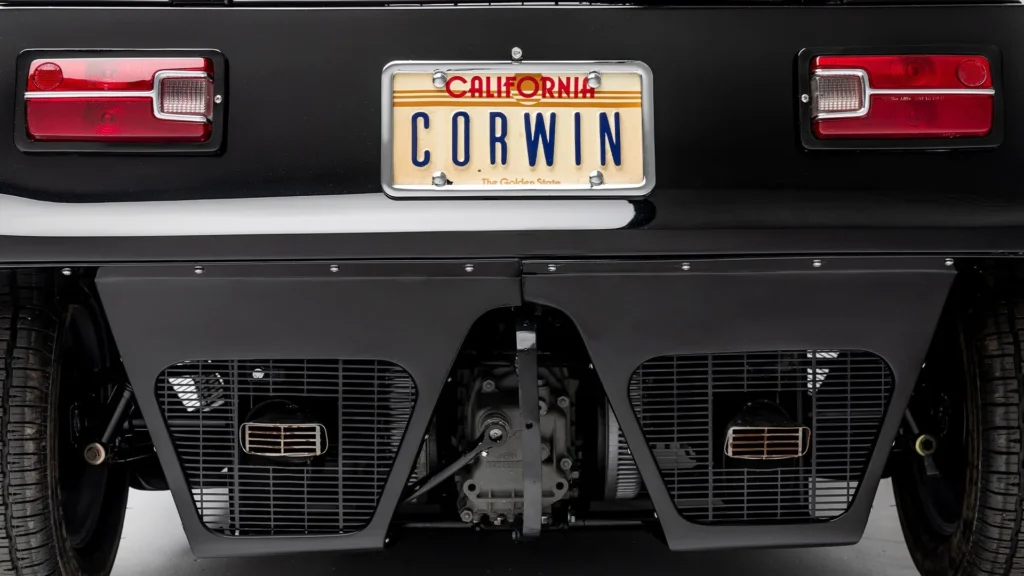
By all objective measure, the idea and concept of the Corwin Getaway is a sound one today and quite novel for the time in which it was conceived. Hall felt that there was a real need for an economical, attractive, fun-to-drive and affordable small car for young people to use in primarily urban settings, as an alternative to a motorcycle. And his experience designing and building small cars for his and other children led him to create the Getaway.
A commercial photography client of Hall’s, Lewis Corwin, agreed to provide the seed money with which to realise the prototype. In exchange for this investment, Hall named the car the Corwin. The sum was $100,000, not inconsiderable in 1965. Combined with Hall’s own stake of $50,000, the funds enabled final design work to be carried out and the prototype was completed by 1969.
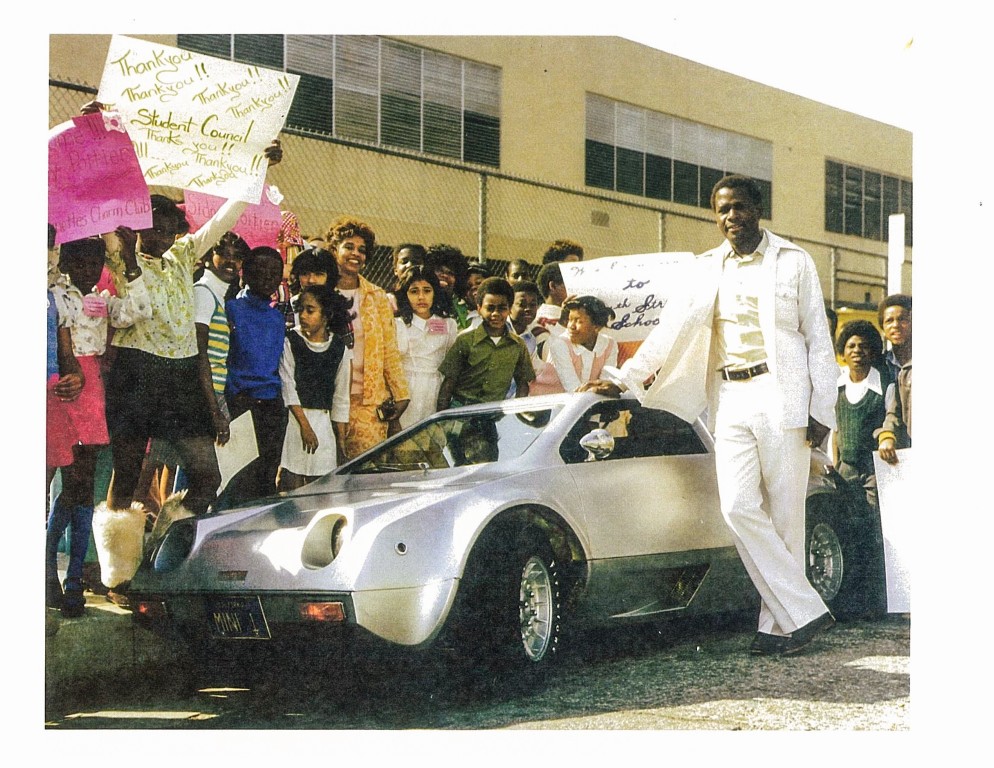
Of course, $150,000 and a prototype do not a production car make. Hall’s connections in the black community of celebrities ensured endorsements for his project from notables including Muhammed Ali, Marvin Gaye, Dance Theater of Harlem founder Arthur Mitchell, singers Marilyn McCoo and Billy Davis Jr, and Ethel Bradley, wife of then Los Angeles mayor Tom Bradley.
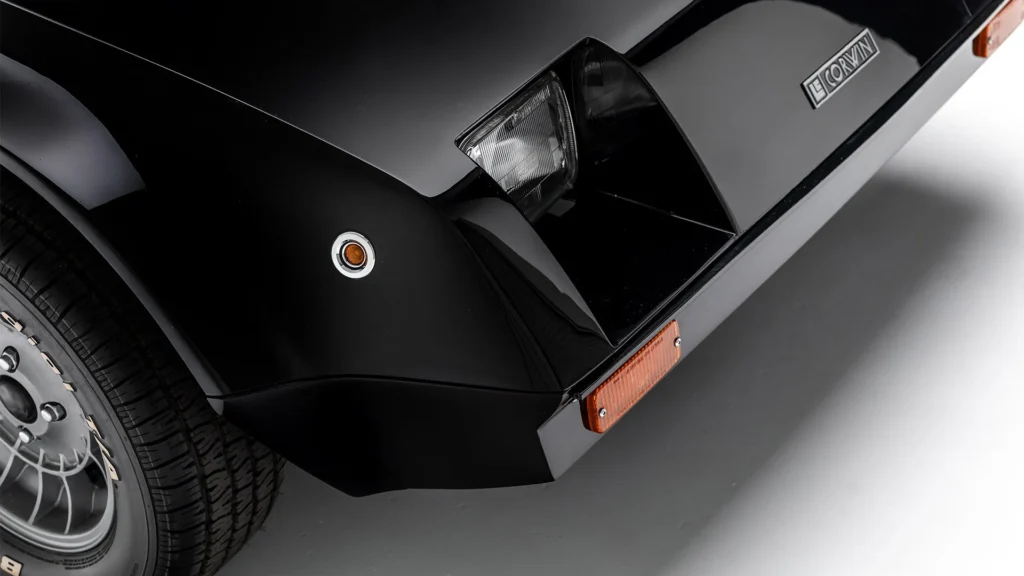
The car, with its final design realised with the help of Dennis Hugely, a student at the renowned Art Center College, made its debut at the 1970 Los Angeles Auto Show to an interested and enthusiastic reception. But there it stopped. The realities of starting a new car manufacturer from nothing, establishing a factory in a place where none existed, and training a completely inexperienced workforce to build it were indeed daunting.
They were also far beyond the scope of the financing to which Cliff Hall had access. Support from celebrities is a good thing, but backing from bankers and the financial markets is what would have been required. Hall lacked the knowledge and the entrée to the world that might have made production possible and that was due in large part to the closure of those avenues to black entrepreneurs.
Did Cliff Hall remain bitter about what he could not achieve with the Getaway? Yes, he did: according to interviews recorded a number of years afterwards, he viewed that as the primary reason why he could not get his car into production. And when we spoke just before he died, the frustration was still evident as he talked about the project.
But it never stopped his creative drive, and that for me is the most disappointing aspect of this story of what might have been. Allied with the right financing and an experienced automotive manufacturing team, the Getaway could have been a viable project. Perhaps not as a stand-alone brand, but as an offering from an established marque. One only has to look at what came in the years after the Corwin Getaway to see how viable Cliff Hall’s concept was in the mid-1960s. So, what is the car like on the road? The Corwin Getaway is a fascinating prototype. And that’s the operative word – prototype. It manifests its faults clearly and quickly, but that takes nothing away from the inventiveness and prescience of the design.
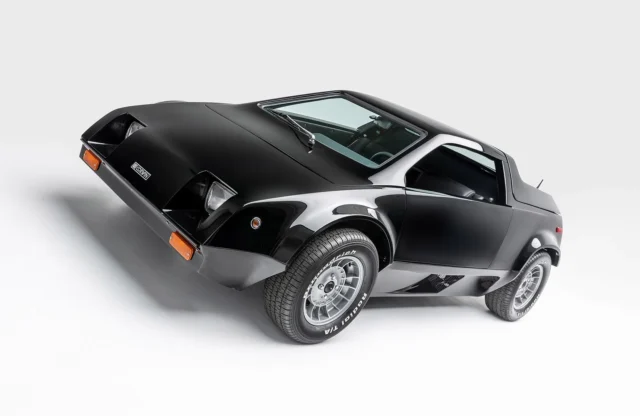
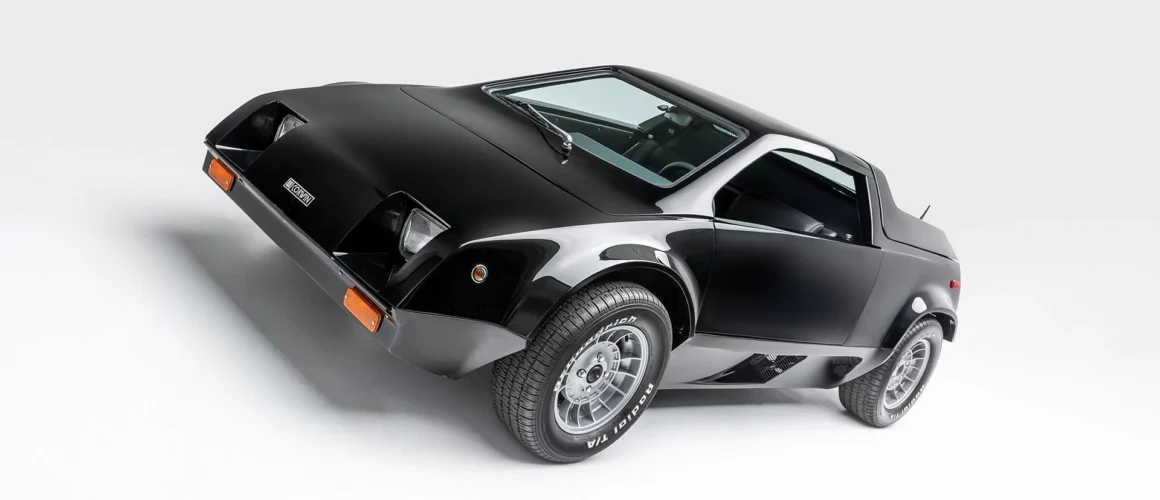
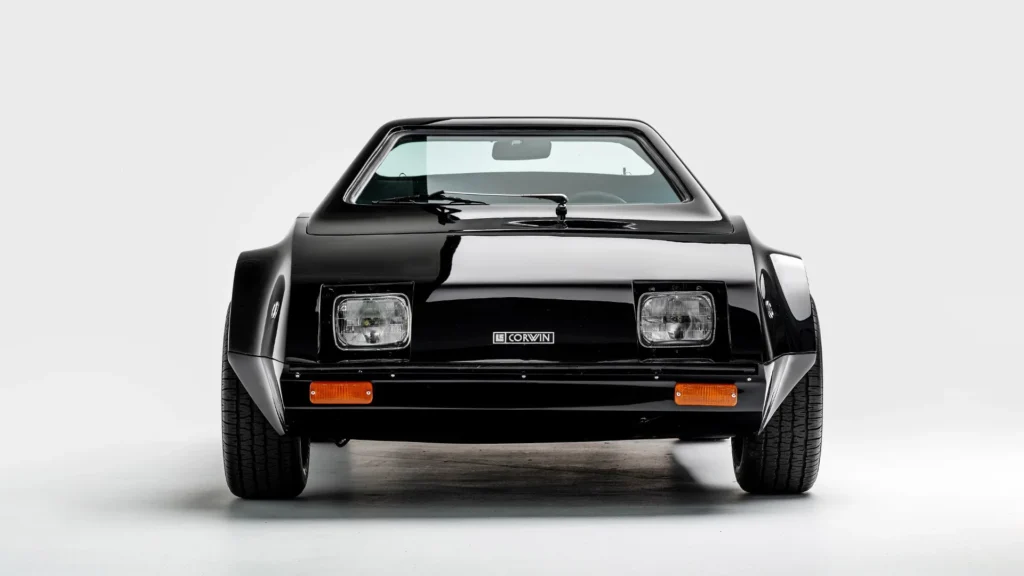
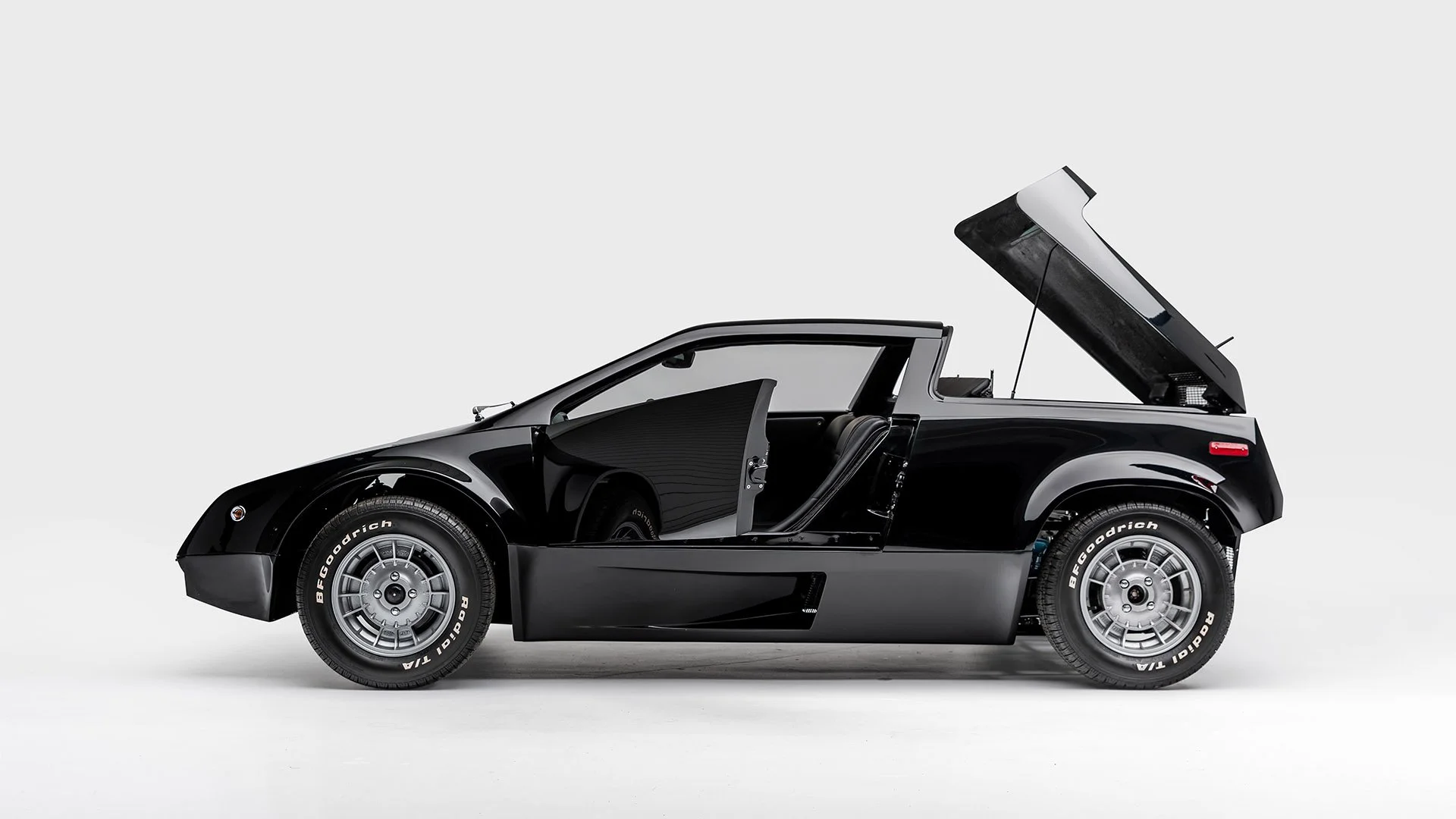
Having been built nearly 20 years before the Pontiac Fiero and Toyota MR2, five years before the pioneering Fiat X1/9 and almost contemporaneously with the Lotus Europa, the Getaway could certainly have been developed into a fun and desirable car. It is powered by a 78bhp Subaru flat-four, paired with a four-speed manual gearbox. The glassfibre body is extremely compact, with minimal front overhang and almost none at the rear. The roof is low, under which are positioned two fixed, contoured bucket seats, very accommodating once you’ve clambered through the door, which can be a bit daunting.
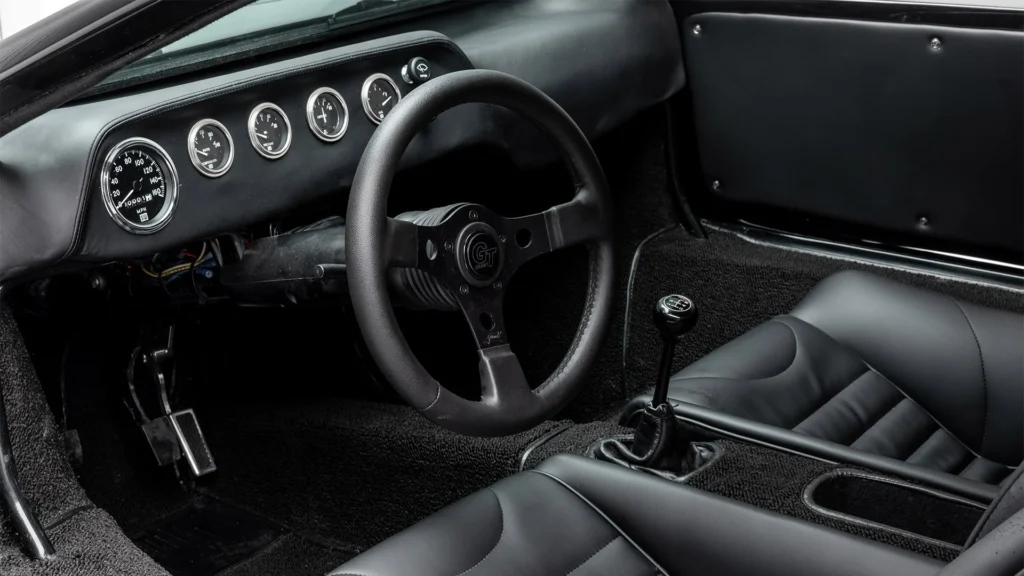
The dashboard contains a series of five round gauges and a pair of knobs, fronted by a thick-rimmed leather steering wheel that projects straight back from below the panel. The gearlever is in the centre of a simple console and the doors are plainly upholstered leather panels. There are no side windows, trunk or glovebox – not a problem for a prototype show car, and doubtless all would have been addressed once production development commenced. I’m sure the roof would have been raised to improve access, too. I am 5ft 8in tall and I just fit inside. Hall was 5ft 9in; seeing photos of him in the car in 1969, it is clear that he is about as tall a driver as might get through the doors of the Getaway.
None of that prevents the car from having an immediate appeal when being driven, for its dimensions and suspension design bring to mind the proverbial go-kart while piloting it through the streets near the Petersen Museum in Los Angeles, where the Getaway lives today. It is only 11ft long, 63in wide and 43in tall. For perspective, that’s only a foot longer than a BMC Mini.
What is rather more off-putting and provides evidence of its show-car status is the gearshift. The linkage travels a tortuous route to the rear-mounted gearbox and selecting gears is a bit of a lottery. Too often starts from rest are attempted in third gear, which the Subaru engine has too little torque to countenance. Once again, a bit of development here would have worked wonders. All of that remains a moot point, for, as with the Tucker 48, of which 51 prototypes were built, what might have been a ‘production’ car remained an elusive dream. And it cannot be denied that racial barriers played a role in its collapse.
Hall was not the last black designer to dream of a new car start-up. Following his graduation from Art Center College in 1956, McKinley Thompson Jr was the first black designer to be hired by Ford and his sketches formed the basis for the first-generation Bronco. After his career at Ford, he came up with the idea for an affordable multi-purpose utility he called the Warrior, to be aimed at auto manufacturers in developing nations as an avenue to mechanisation, much as the Model T and Fiat Topolino had been in their time. It, too, came to naught, but the quest to bring both societal and commercial growth to communities is something it had in common with the Corwin.
Though the Corwin Getaway did not live up to its potential, Cliff Hall did not let it stop his drive and determination. He continually found ways to express his creativity, and he was eager to share his computer-generated abstract artwork and plans for aerodynamic motorcycles and easy-access walk-in limousines.
The Petersen Automotive Museum purchased the Corwin, out of long storage and somewhat the worse for wear, in 1994, and embarked on a crowdfunded restoration that was completed in 2019. The first time I saw the car it captured my imagination and I chose it to be featured in my segment Assess and Caress with Donald Osborne on Jay Leno’s Garage, in an episode titled Unsung Heroes.
I could scarcely have imagined when I first saw it that I would have the chance to meet Cliff Hall and share his energy and memories. He remains an inspiration to me and I hope to many others who will never let their dreams fade away in the face of seemingly insuperable challenges. The Corwin Getaway may not have ended up in our driveways but its urban potential and the ingenuity of its designer are clear to anyone who sees it.