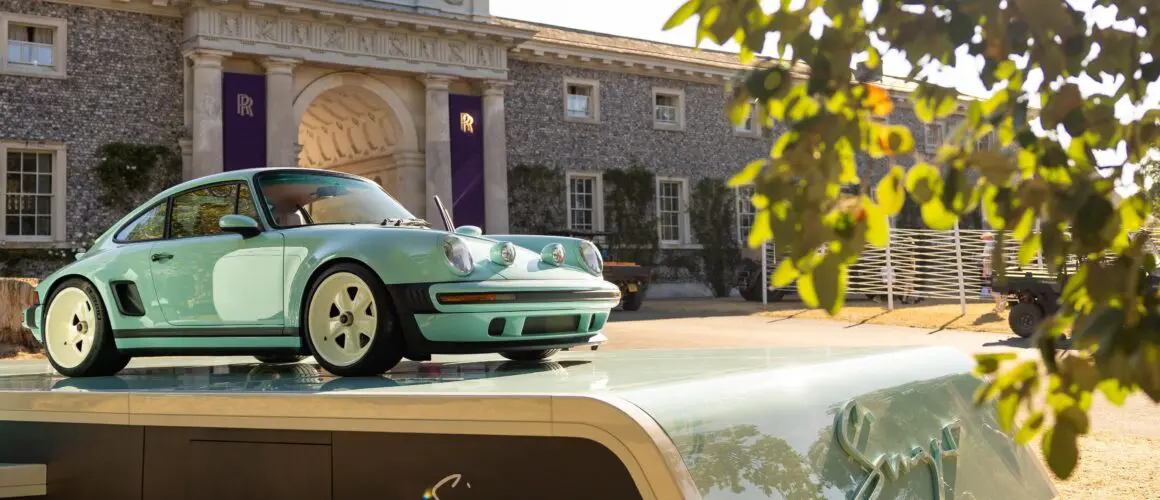
‘I think if there is some scepticism about our position at the Festival of Speed this year, it will be put into perspective over the next couple of years,’ Rob Dickinson says, with quiet confidence. It’s the Goodwood Media Drive Day and I’m sitting across from the founder of Singer Vehicle Design in the Jackie Stewart Pavilion, trackside of the Motor Circuit.
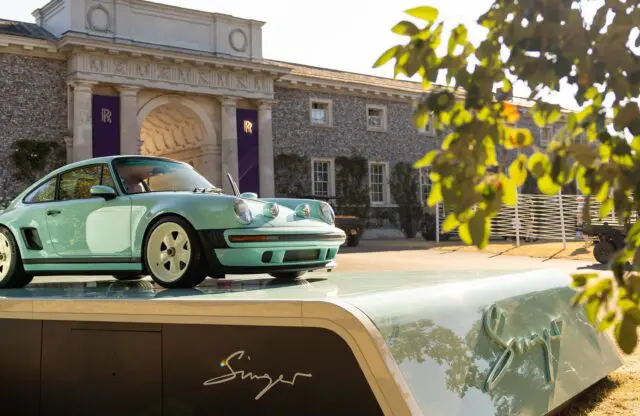
That scepticism stems from Singer being named as the subject of Gerry Judah’s towering Central Feature at this year’s Festival of Speed. Since Judah created the first sculpture in 1997, the honour has predominantly been reserved for automotive titans such as Porsche, Ferrari and BMW. Singer, by contrast, reimagines fewer than 200 Porsche 964s per year.
‘It sounds a bit wanky,’ Dickinson continues. ‘But if Goodwood’s celebrating anything, I think it’s the philosophy of car nuts running a car company – which is unheard of, really. Car nuts don’t run car companies; executives do.’
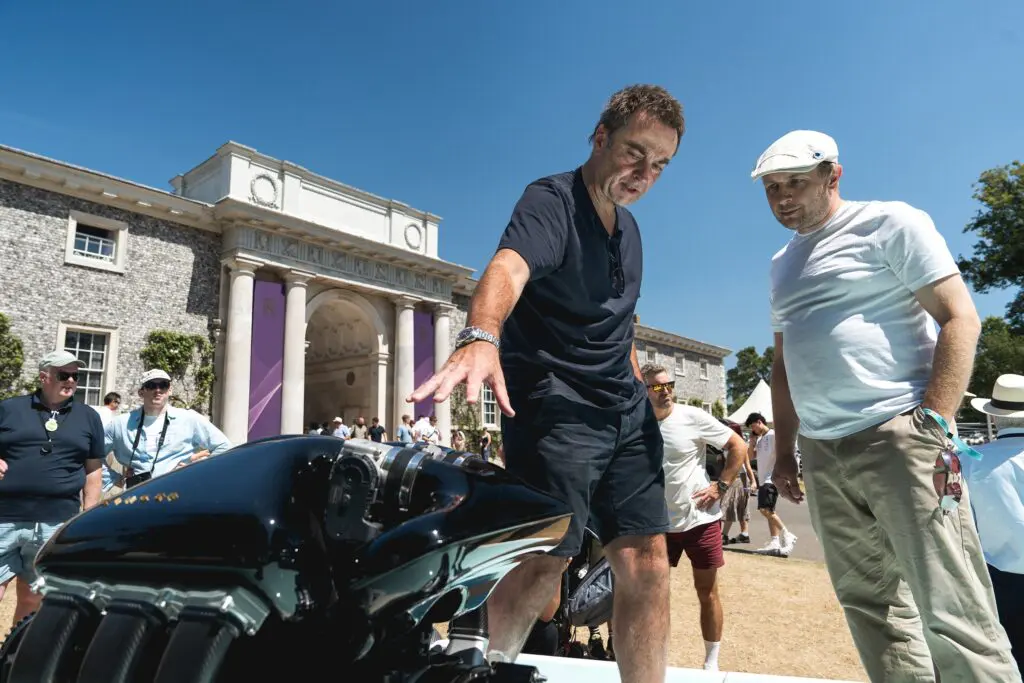
It is, on the face of it, an unconventional choice – which seems fitting for a company whose 17-year rise has been anything but. Where some marques chase volume and broader appeal, Singer opted to build fewer cars to a higher standard, at prices to match. ‘The philosophy of the company is that the cars have to be f**king brilliant,’ he says matter-of-factly. ‘Magnificence at any cost. There’s no committee, it’s just me and my team.’
Dickinson honed that obsessive streak during the decade he spent as frontman and principal songwriter of Catherine Wheel, the British shoegaze band who built a cult following in the 1990s on the back of records that were both meticulously crafted and expensive to make. The parallels with Singer are not lost on him. ‘When I used to play in a band I always imagined the person in the crowd who didn’t really want to be there,’ he says. ‘I always played to the assumed sceptic. Proper rock stars play to their adoring fans – I played to the unconvinced.’
You don’t have to be an outright sceptic to be suffering from 964 restomod fatigue. Singer’s niche has proved so popular that myriad companies have followed suit with varying degrees of success. Singer’s influence on the 964 market has been considerable, and is a contributing factor in a 69 per cent rise in values over the past five years, according to Hagerty. The pandemic-era classic car boom has played its part too, but either way the 964 is now firmly out of reach for many enthusiasts. For those in that camp, what Dickinson says next may provoke equally strong feelings.
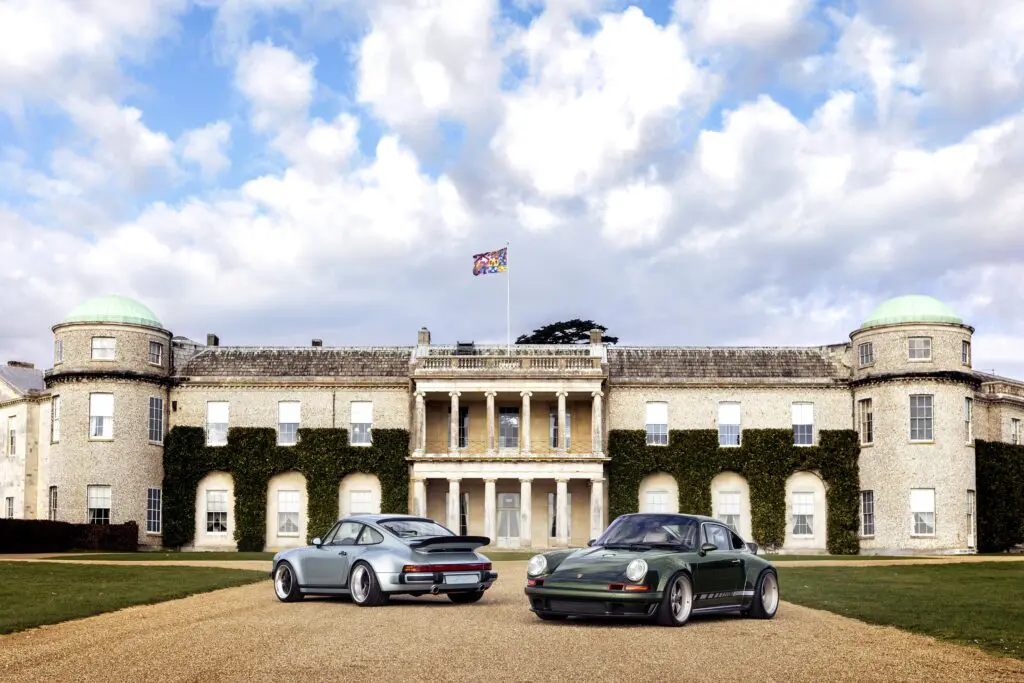
‘There will be Singer stuff that’s Porsche, but not 911,’ he says. As a journalist, it’s almost disarming for a company founder to make such an unambiguous statement – particularly when that company’s entire identity has been built around a single model. ‘I’m a serial Porsche perv – 928s, 356s, all of them,’ he laughs. ‘There’s so much of Porsche’s past and heritage to be celebrated that, of course, we’re thinking about it. We’ve already done stuff that’s not been seen yet,’ he teases.
Away from Singer’s future offerings, it’s clear that Dickinson’s automotive passion extends far beyond Stuttgart. He recently treated himself to a Bentley Continental T, simply because he couldn’t resist. ‘I just fall in love with cars and think, “how can we make this the best it could ever be with 30 years of hindsight and new engineering?”’ he says. ‘The list is quite long: Porsches, Bentleys, Ferraris, everything else. It’s about finding that kernel of magnificence and getting rid of all the shit. That was my idea in 2008 when Singer did it with the 911.’
Talk of an expanded model range and a Central Feature sculpture outside Goodwood House represents quite a journey for a company whose founder was renting workshop space in the Californian desert in 2008 – the year Lehman Brothers collapsed and took much of the global financial system with it. ‘The first ten years were desperate and tricky,’ he admits. ‘We didn’t make a profit for years and years. Somehow we survived through my tenacity and relentless refusal to give up. There were many years when we perhaps should have given up, but I’m glad we didn’t.’
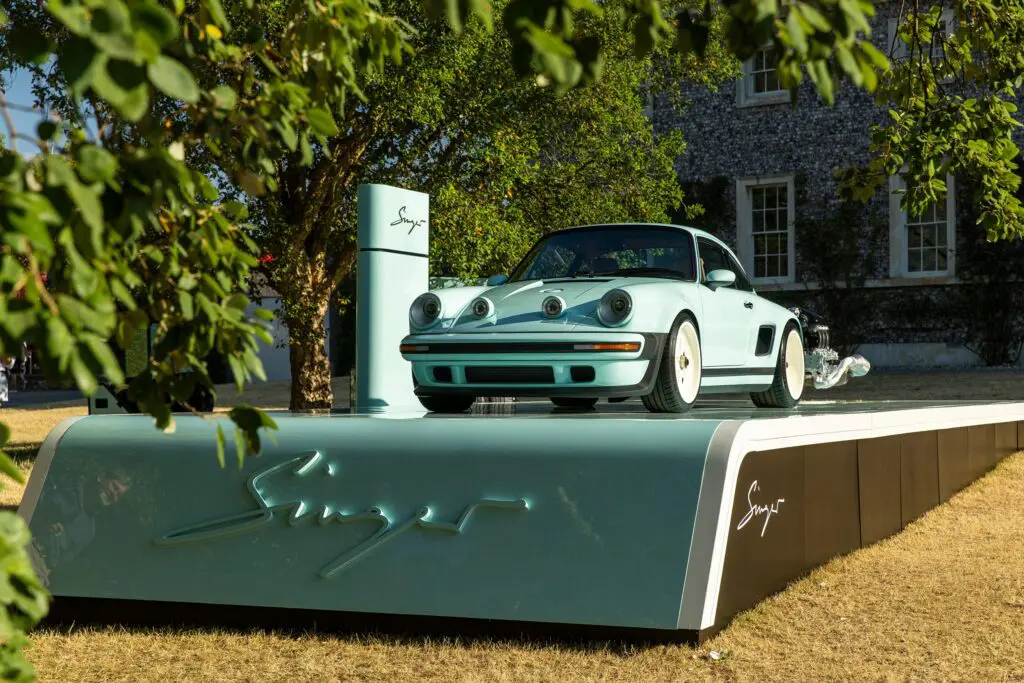
Singer’s survival through those years was down to one thing above all else. ‘Whether you like it or not, the Porsche 911 is the most important sports car in the world,’ he continues. ‘I knew that if we built the perfect 911 and the message got out that this wasn’t bullshit, then we would have a company. That never left me, even when things were shit.’
Electrification and its political ramifications is the latest challenge Singer has had to navigate. Despite the proliferation of electrified restomods earlier in the 2020s, Dickinson’s belief that electrification poses no existential threat seems increasingly well-founded. Porsche itself dramatically rowed back on EVs in 2025, costing the company billions. ‘Nobody’s interested in electricity for getting their kicks,’ he says bluntly. ‘There’s a whole generation of kids who love cars. They love F40s. We’re going to be just fine.’
Whether fronting Catherine Wheel or building his ultimate vision of the Porsche 911, Rob Dickinson has spent much of his career playing to the unconvinced. On the evidence of a Central Feature at Goodwood this July, it’s a strategy that’s served him well.